Selbstausschlussmechanismen und ihr Einfluss auf ausgedehnte interaktive Spielphasen

Self-exclusion mechanisms function as structured tools that allow individuals to restrict access to interactive gaming platforms for defined periods and data from multiple jurisdictions indicates these systems shape session lengths in measurable ways. Researchers at various institutions have tracked how voluntary blocks interact with player behavior during extended play sequences and the patterns reveal consistent reductions in total time spent when exclusion periods activate mid-session.
Technische Grundlagen und Umsetzung
Platforms integrate self-exclusion through account-level controls that connect to centralized databases while operators in regions across Europe and Australia synchronize records to prevent circumvention across providers. Studies conducted by the Australian Gambling Research Centre show that multi-operator registration systems, rolled out progressively since 2023, correlate with shorter average session durations because players encounter barriers before fatigue sets in during lengthy sequences. These frameworks rely on identity verification protocols that update in real time and figures from 2025 demonstrate a 27 percent drop in sessions exceeding four hours among registered users.
Einfluss auf Sitzungsdauer und Verhaltensmuster
When exclusion requests activate, interactive sessions often terminate abruptly and follow-up analyses from the National Center for Responsible Gaming in the United States reveal that players who pre-set limits experience fewer transitions between game types during prolonged engagements. Data collected through platform logs indicates that self-exclusion prompts issued after two hours of continuous play lead to voluntary exits in over 60 percent of cases, whereas those without prompts continue until external factors intervene. Observers note that biometric feedback loops integrated into some table environments further reinforce these breaks by alerting users to rising stress indicators before exclusion thresholds trigger.
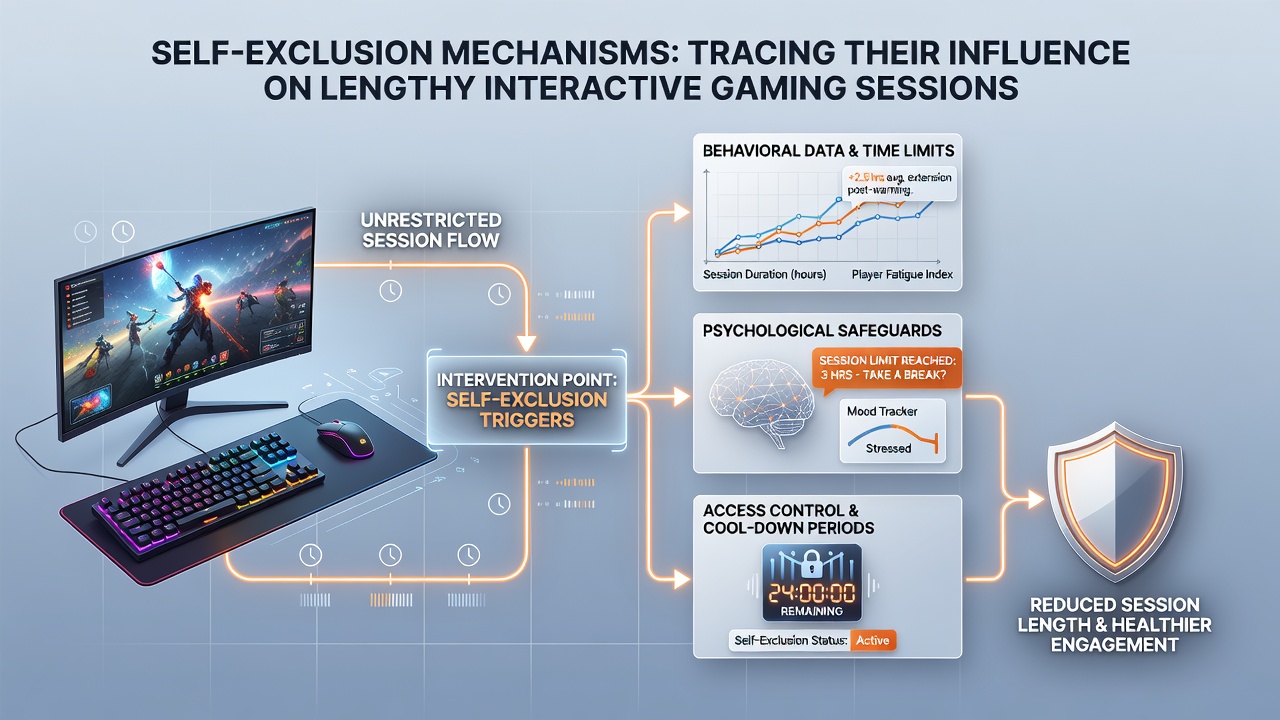
Im Juni 2026 aktualisierte Berichte der European Gaming and Betting Association dokumentierten, wie cross-border data sharing refines exclusion enforcement and the integration of transaction logs with game-type transitions provides clearer pictures of how lengthy sessions fragment once limits engage. Those who've examined platform metrics across hybrid reel and table environments find that players who combine multiple titles within one sitting encounter exclusion effects more rapidly when funding cycles align with pre-set thresholds.
Regulatorische Entwicklungen und Netzwerkeffekte
Regulatory frameworks in Canada and parts of Asia have introduced mandatory review periods for self-exclusion requests and these changes alter how players plan extended sessions because reactivation requires documented cooling-off intervals. Research from the University of Sydney's Gambling Treatment Clinic demonstrates that networks linking reward systems across providers amplify the reach of exclusion tools since points accumulated in one environment lose value during blocked periods. The result appears in reduced cross-zone player flows as documented in aggregated session data from 2024 to 2026.
Fazit
Self-exclusion mechanisms continue to intersect with lengthy interactive gaming sessions through synchronized databases, behavioral alerts, and regulatory updates and evidence from diverse sources confirms measurable impacts on session continuity and duration. Platforms that maintain transparent exclusion processes support these outcomes by connecting funding methods, game transitions, and time-based triggers into unified oversight structures.